Author Archives: Back Streeter

Discovering Abingdon’s Little Basement Museum


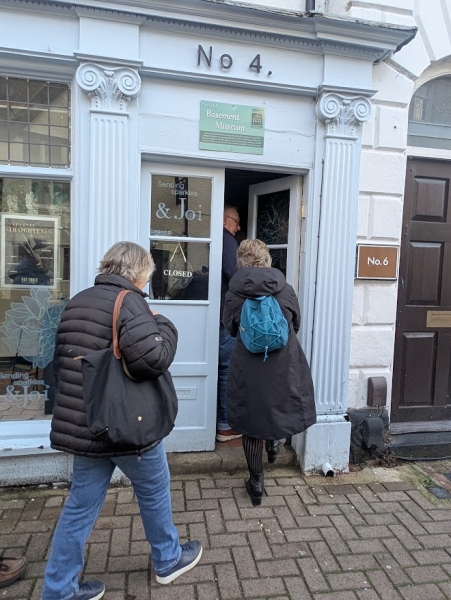
A visit to the large Abingdon County Hall Museum led to an unexpected extra discovery: the Little Basement Museum. Tours can be booked through the museum, and we happened to arrive just as one was starting.
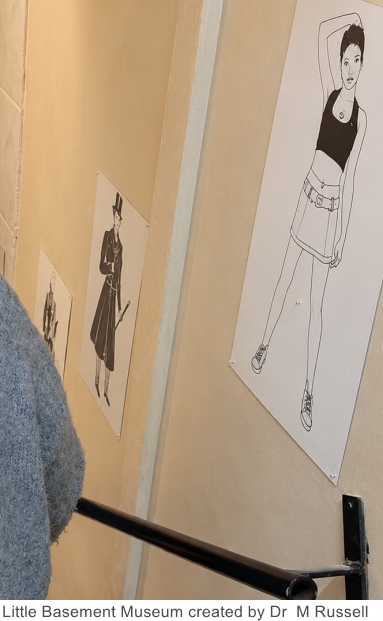
We went down some stairs, passing a display of fashions arranged at 200-year intervals, with the styles becoming progressively older as we descended. The display illustrates how the ground level of ancient Abingdon lies beneath today’s streets. Over centuries, dust, soil and other deposits gradually accumulate, raising the ground level and burying earlier surfaces.

The illustrations were added by Dr Russell, a physicist who took over the building in the 1970s. His curiosity about some stones in the floor led him to investigate what lay beneath. This led to a series of discoveries and eventually the creation of a museum exploring the passage of time at this site.
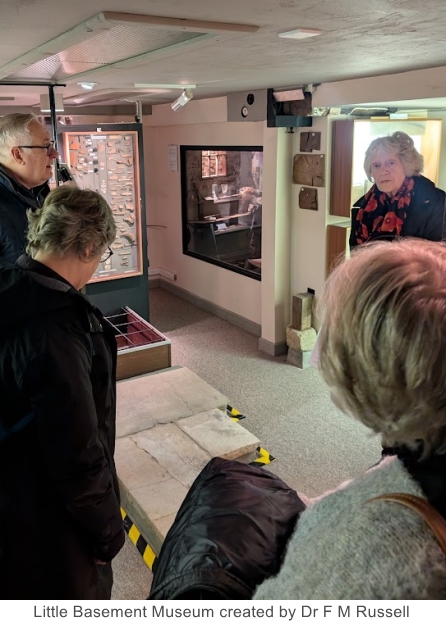
The basement museum contains objects excavated beneath the building: numerous clay pipes, a large intact jar, thought to have been used for storing olive oil and later tobacco, and stone slabs which may have come from Abingdon Abbey.
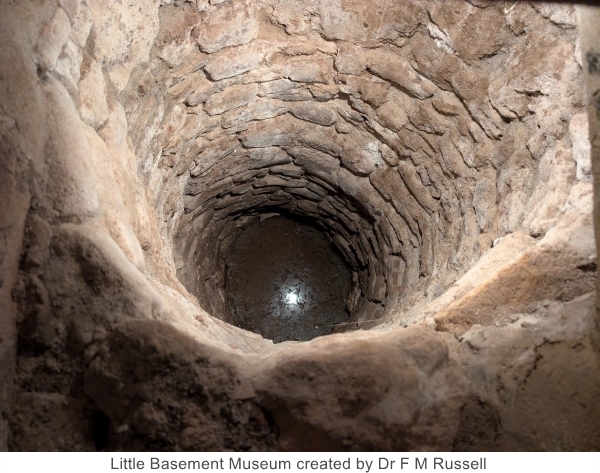
There’s also a well, which has water in it again after running dry during the summer, and an archaeological excavation pit that remains open for further investigation. Research displayed on the walls suggests that people have occupied this site for around 5,000 years. Some of the professions of more recent inhabitants are displayed, including a diorama of a worker with an early metal lathe.

It is interesting to think how many generations have lived and worked here, and the traces that have gradually disappeared under the ground.
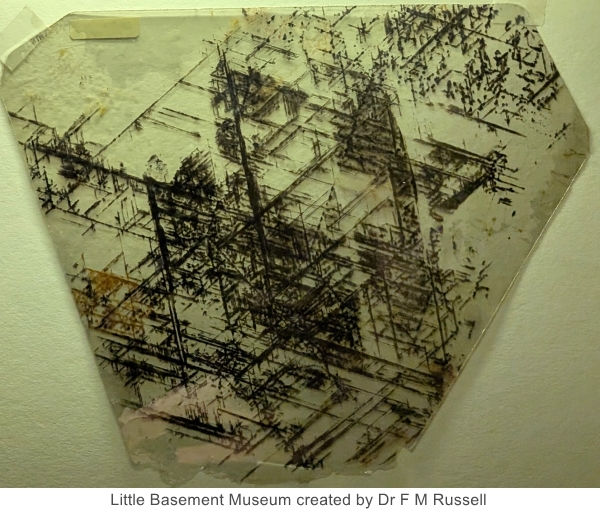
Dr Russell’s investigations have not been confined to what lies beneath the building. Upstairs, he has also pursued scientific discoveries. He investigated unexplained lines found in natural mica crystals. His experiments led to the discovery of a way of transporting electricity through solid materials without applying a voltage. The phenomenon has since attracted further research and may have potential medical applications.

This building is an archaeological time capsule underground with future looking Science discoveries above. As our guide said, “Dr Russell thinks outside the box.”
Final Days for the British Heart Foundation Shop


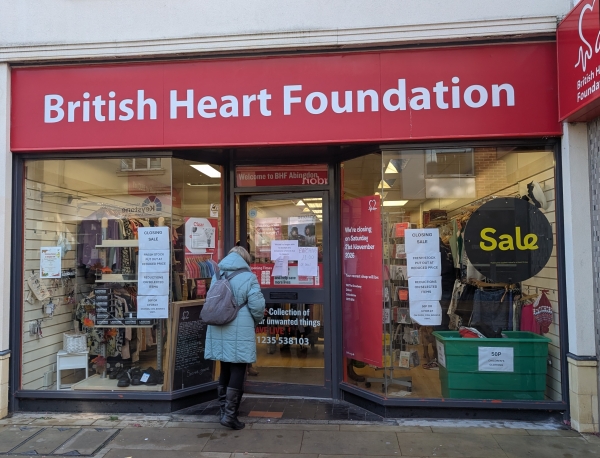
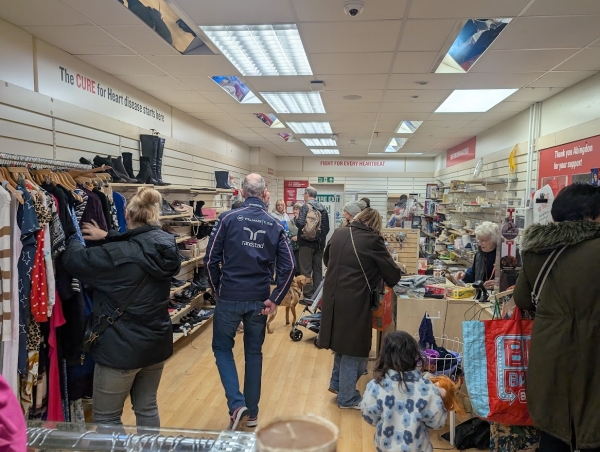
The British Heart Foundation shop closes on Saturday 21st November. It stopped accepting donations last week. The storeroom upstairs has been emptied, with everything brought downstairs to be sold. The shop itself is now beginning to look rather bare as customers take advantage of the closing-down offers. Many items are priced at just 50p. Bags of clothes are going for £5.

The shop has been running with a deputy manager, and a part time assistant, and a team of volunteers.

One volunteer, Dorothy (seen above on the till), has been there since it first opened over twenty years ago.

Bury Street café closes suddenly


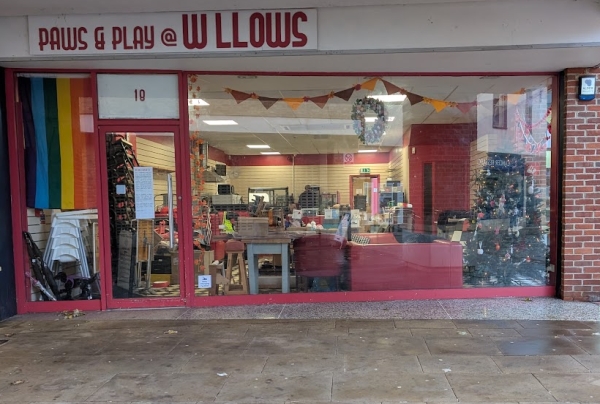
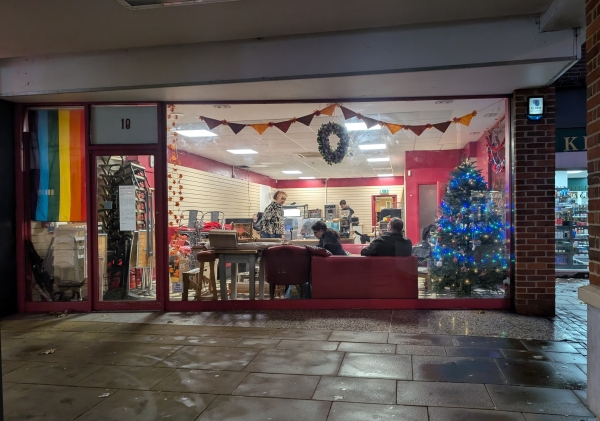
Willows, a café in Bury Street, has announced that it has ceased trading because of circumstances beyond the owners’ control. I heard at the Market yesterday that staff turned up at work yesterday morning to be told the business was closing.

In a notice displayed in the shop window, Mike and Gerard apologised for the sudden closure and thanked customers for supporting them over the past nine years. They recalled the challenges of the COVID restrictions and their move from Stert Street to Bury Street.

They say they are considering their future options, including looking for new premises.

There is another closure in Bury Street this week, with the British Heart Foundation due to close. However, that closure has been planned for months. The closure of Willows is sudden and everything is being quickly packed up inside.

Willows borders the area covered by redevelopment plans submitted last year for part of Bury Street precinct. The Willows’ premises does not appear to be directly affected. Those plans do include a new café. The Bury Street’s owners may have wider plans for the area, because of the redevelopment plans, but I do not know whether these are connected with the café’s sudden departure.

Over the years, Willows has become known as a welcoming and inclusive business, closely involved in the local community. It has hosted gaming and art and craft sessions on the premises and been behind the Paint Abingdon Pink event over the past two years. Its sudden closure is a great disappointment to its staff and customers.

Onwards and Sideways – a film with an Abingdon connection


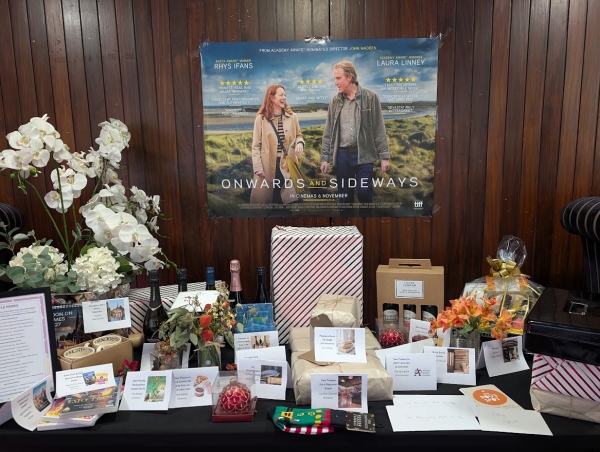
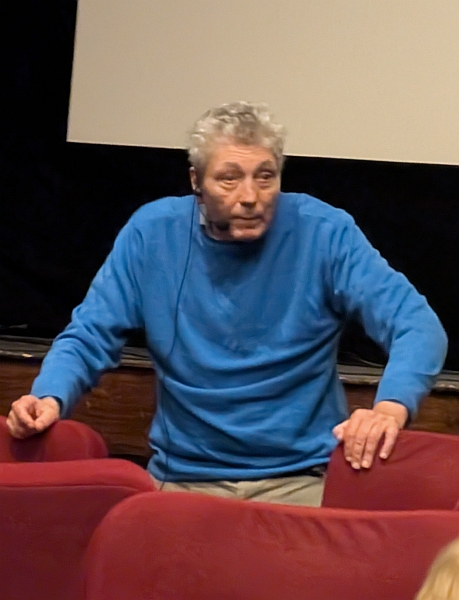
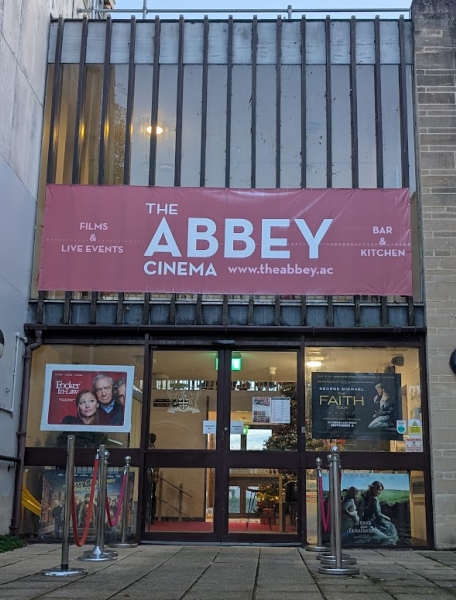
Onwards and Sideways is showing at the Abbey Cinema this week. Local businesses have donated many prizes for a raffle, which raises money for Parkinson’s charities. At some screenings, the writer, Paul Mayhew-Archer, introduces the film and takes questions from the audience afterwards.

Paul lived in Abingdon for much of his life and now lives in a nearby village. He taught at John Mason School, where he wrote school plays, before joining the BBC and making scriptwriting his profession. He is best known for his work on The Vicar of Dibley, but has also written and helped produce many other comedies.

Paul was diagnosed with Parkinson’s disease in 2011. He subsequently made a BBC documentary, Parkinson’s: The Funny Side, which explored the condition through humour and looked at the search for a cure.

He told the audience that he had been working on Onwards and Sideways for about ten years. Covid delayed the film, but the extra time allowed him to develop and improve the script.

The film tells the story of a man and a woman who receive a Parkinson’s diagnosis on the same day. Their doctor tells them they have five good years left, and we see how their relationship develops as they live with the condition.

The plot includes some of the less familiar effects of Parkinson’s. For example, the disease and its medications can sometimes lead to compulsive gambling, and nightmares that are difficult to wake from. Deep Brain Stimulation (DBS), a treatment involving electrodes implanted in the brain, can help some patients, although symptoms can return when the device is switched off.

The film combines humour with moving and engaging scenes, and the two main characters work well together.

Before the screening, Paul and his wife Julie spent time chatting with members of the audience at the Abbey Cinema. Julie is a former Mayor of Abingdon and former leader of the Town Council.

Paul praised the Abbey Cinema for its willingness to try new things.

Paul appears in the film as a character who speaks scathingly about the effects of the disease. He gets to deliver some of his own lessons about life in a eulogy, which he records on his deathbed for the funeral.