I mentioned St Frideswide’s Way in an earlier post, and today I walked the section between Oxford and Abingdon.
The route follows the Thames Path for part of the way, but also takes in churches at Iffley, Littlemore, Sandford and Radley. From Radley, it continues via Radley Lakes to Abingdon. The total distance is 11.3 miles. Guides to the route are available from Christ Church Cathedral in Oxford.
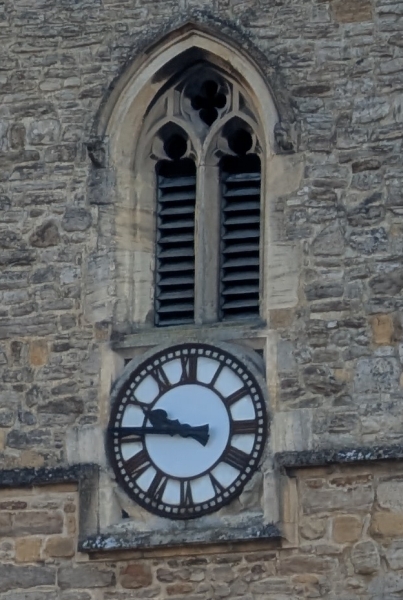
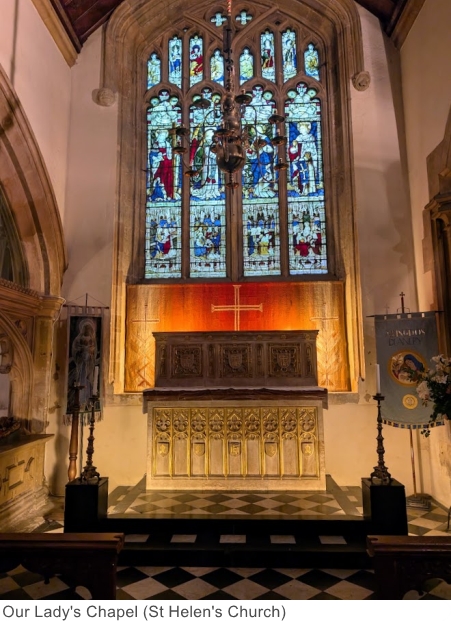
One of the nice surprises was finding that all the seven churches and one Christian Community I visited were open. This gave me the opportunity to collect pilgrims’ stamps along the way, including those at St Nicolas and St Helen’s in Abingdon.
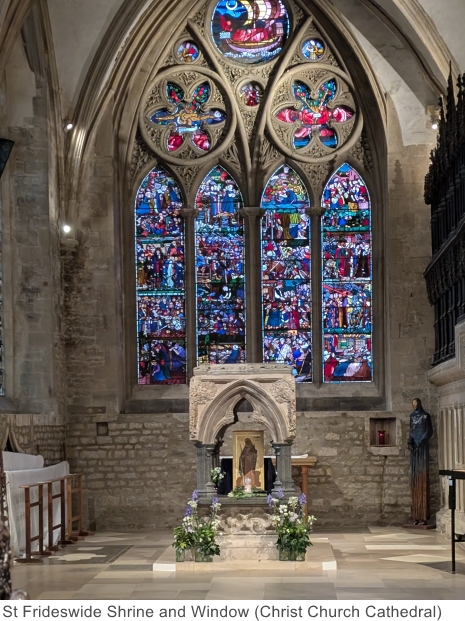
I knew very little about St Frideswide before setting out. She was an Anglo-Saxon princess who lived around the late seventh and early eighth centuries and is regarded as the patron saint of Oxford.
According to legend, Frideswide decided to devote her life to God rather than marry. However, a prince named Algar was determined to make her his wife. She refused his advances and fled, eventually finding refuge in the Oxford area. The story goes that Algar pursued her into Oxford and was struck blind. Frideswide offered to heal him on the condition that he abandon his pursuit of her. He agreed, and his sight was restored.
Frideswide went on to establish a religious community on the site where Christ Church Cathedral now stands. Her shrine remains in the cathedral, although her relics disappeared during the Reformation, when the original shrine was destroyed.
However, for me, the highlight of the walk was visiting The College at Littlemore, where John Henry Newman lived from 1842 to 1846. It is now a small religious community.
The next section of St Frideswide’s Way, from Abingdon to Dorchester, is about 12.5 miles. That will have to wait for another day.
P.S. Please let me know if you encounter any problems with the blog. I have moved it to a more modern package that should be easier to maintain. There is still one further change to make – which is now possible.