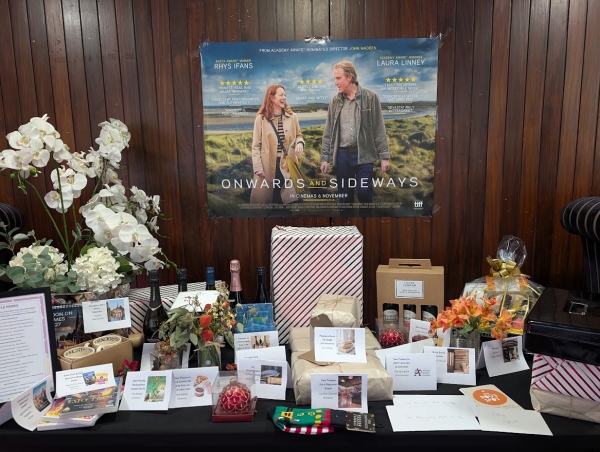
Onwards and Sideways is showing at the Abbey Cinema this week. Local businesses have donated many prizes for a raffle, which raises money for Parkinson’s charities. At some screenings, the writer, Paul Mayhew-Archer, introduces the film and takes questions from the audience afterwards.
Paul lived in Abingdon for much of his life and now lives in a nearby village. He taught at John Mason School, where he wrote school plays, before joining the BBC and making scriptwriting his profession. He is best known for his work on The Vicar of Dibley, but has also written and helped produce many other comedies.
Paul was diagnosed with Parkinson’s disease in 2011. He subsequently made a BBC documentary, Parkinson’s: The Funny Side, which explored the condition through humour and looked at the search for a cure.
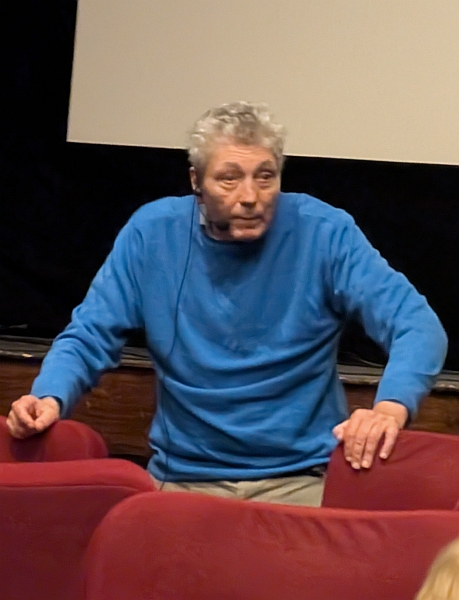
He told the audience that he had been working on Onwards and Sideways for about ten years. Covid delayed the film, but the extra time allowed him to develop and improve the script.
The film tells the story of a man and a woman who receive a Parkinson’s diagnosis on the same day. Their doctor tells them they have five good years left, and we see how their relationship develops as they live with the condition.
The plot includes some of the less familiar effects of Parkinson’s. For example, the disease and its medications can sometimes lead to compulsive gambling, and nightmares that are difficult to wake from. Deep Brain Stimulation (DBS), a treatment involving electrodes implanted in the brain, can help some patients, although symptoms can return when the device is switched off.
The film combines humour with moving and engaging scenes, and the two main characters work well together.
Before the screening, Paul and his wife Julie spent time chatting with members of the audience at the Abbey Cinema. Julie is a former Mayor of Abingdon and former leader of the Town Council.
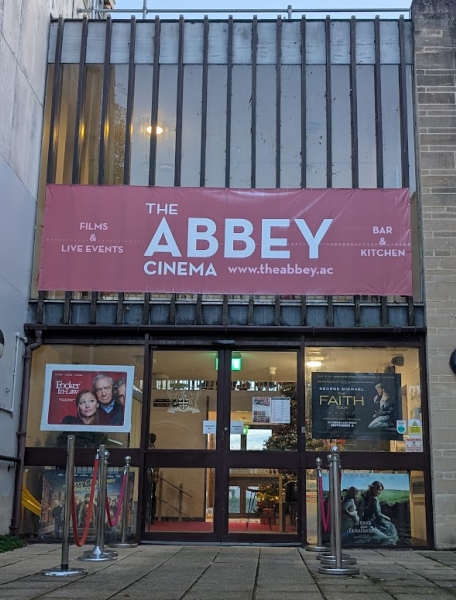
Paul praised the Abbey Cinema for its willingness to try new things.
Paul appears in the film as a character who speaks scathingly about the effects of the disease. He gets to deliver some of his own lessons about life in a eulogy, which he records on his deathbed for the funeral.
It is an excellent film , funny, moving and informative – thoroughly recommended