Author Archives: Back Streeter

A busy Saturday in Abingdon town centre

There was a lot going on in the town centre this morning, despite there being no particular event planned for the Market Place.
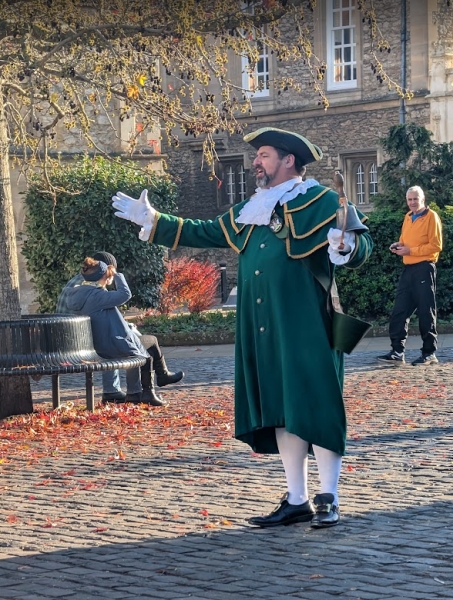
The Town Crier was out and about, announcing that the Christmas Extravaganza and Christmas Lights Switch-On takes place next Saturday.
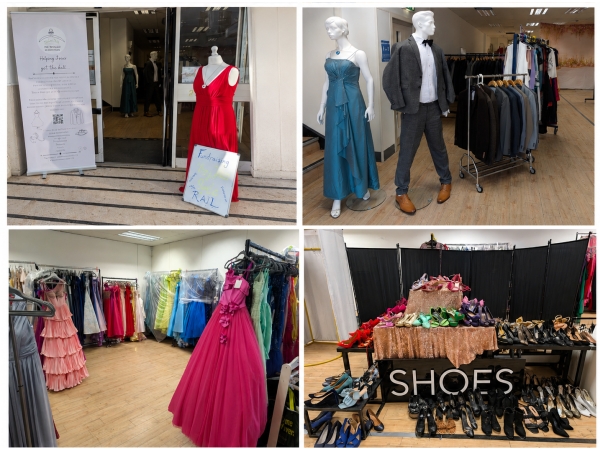
Madrina, which uses the shop near Poundland to provide ball gowns and suits for young people in Abingdon who might otherwise be unable to attend their school prom, was open.

Twice a year, they hold a fundraising sale, offering donated items from their rails, along with shoes and other things that are not quite right for the prom. People can pick up a bargain while helping Madrina raise funds through money donations.
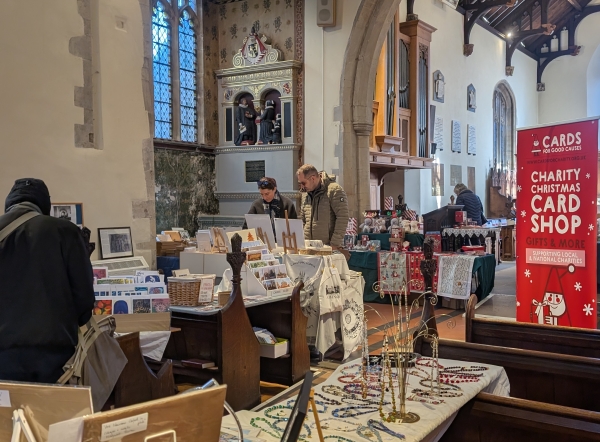
At St Nicolas Church, there was more than just the Charity Christmas Card Shop. The church was also hosting an art exhibition organised by the Abbey Group.
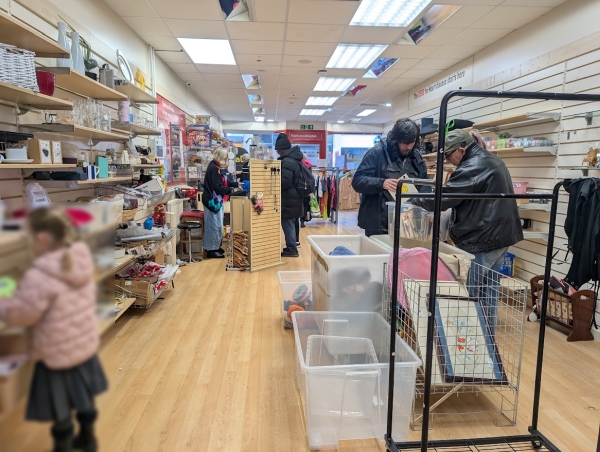
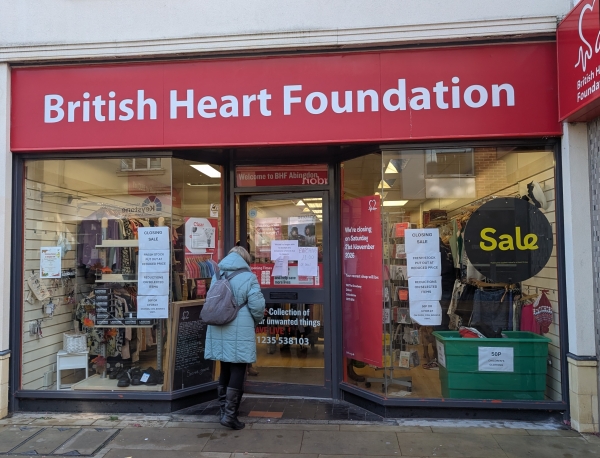
Meanwhile, the British Heart Foundation shop was having its final day of trading. Staff and volunteers will be returning on Monday to clear away whatever remains.
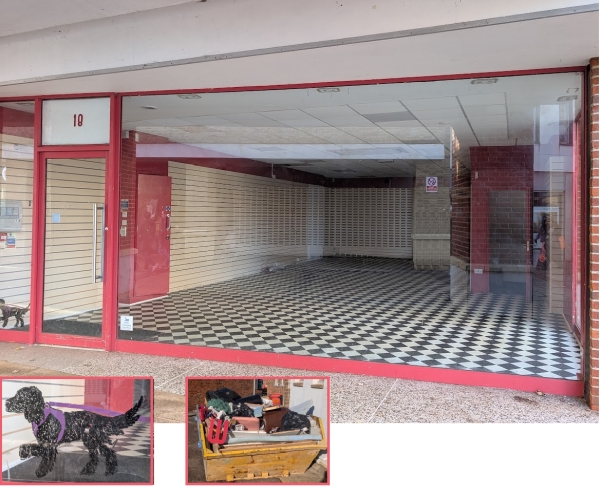
Willows in Bury Street has been cleared out in less than a week. That makes two shops closing in Bury Street in the space of a week.

Out the back, a skip had appeared, with a letter W sticking out of it. Inside, everything had gone. The only thing left was a painting of a dog on the window glass.
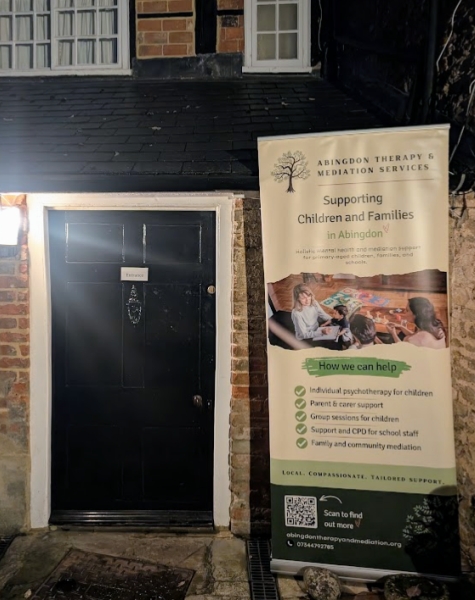
Abingdon service aims to improve children’s mental health support


Abingdon Therapy and Mediation Service held its launch event at St Ethelwold’s House this evening. It gave people an opportunity to meet the team, hear about the service and talk to some of those involved in using it.

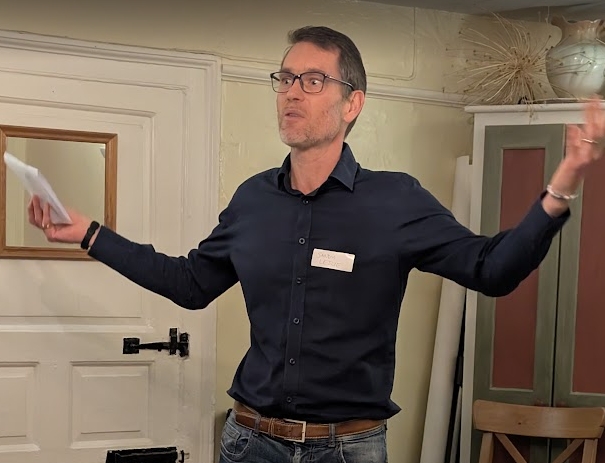
Founder Sandy Leslie gave a short speech explaining why he had established the service. The Abingdon Bridge charity provides support for teenagers and young people in Abingdon, but there is a gap in mental health provision for primary school children. NHS waiting lists and the cost of private therapy can make it difficult for some families to get help.

Sandy also read out a letter from Layla Moran MP, wishing the new service well in addressing the need for early intervention. The aim is to help children while difficulties are still manageable, rather than leaving problems until they become harder to resolve.

The service currently has three projects running in primary schools, two in Abingdon and one in Oxford. Therapists offer support to children and also provide guidance for parents and school staff.

The evening also included music played on a theremin, an unusual electronic instrument controlled by moving the hands in the air without touching it. The pitch and volume change according to the player’s hand movements. Some of the children at the launch had a go, each producing sounds that seemed to reflect their own personality – like a musical personality test.

The new service is run as a Community Interest Company (CIC), a business that exists to serve its community rather than make a profit for shareholders. Any surplus is reinvested in the service.

Discovering Abingdon’s Little Basement Museum


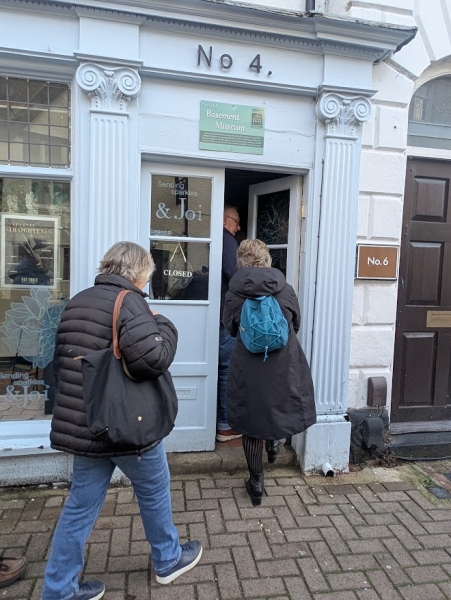
A visit to the large Abingdon County Hall Museum led to an unexpected extra discovery: the Little Basement Museum. Tours can be booked through the museum, and we happened to arrive just as one was starting.

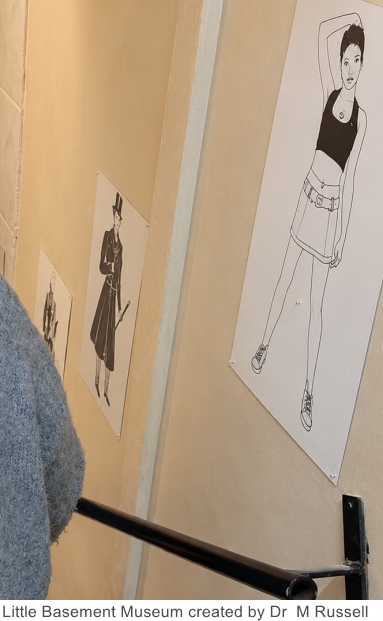
We went down some stairs, passing a display of fashions arranged at 200-year intervals, with the styles becoming progressively older as we descended. The display illustrates how the ground level of ancient Abingdon lies beneath today’s streets. Over centuries, dust, soil and other deposits gradually accumulate, raising the ground level and burying earlier surfaces.

The illustrations were added by Dr Russell, a physicist who took over the building in the 1970s. His curiosity about some stones in the floor led him to investigate what lay beneath. This led to a series of discoveries and eventually the creation of a museum exploring the passage of time at this site.

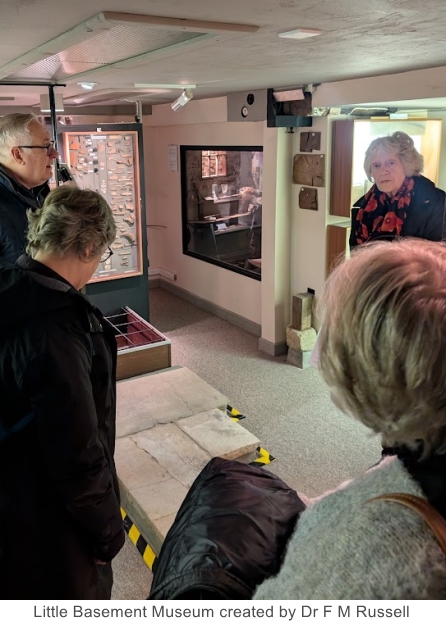
The basement museum contains objects excavated beneath the building: numerous clay pipes, a large intact jar, thought to have been used for storing olive oil and later tobacco, and stone slabs which may have come from Abingdon Abbey.

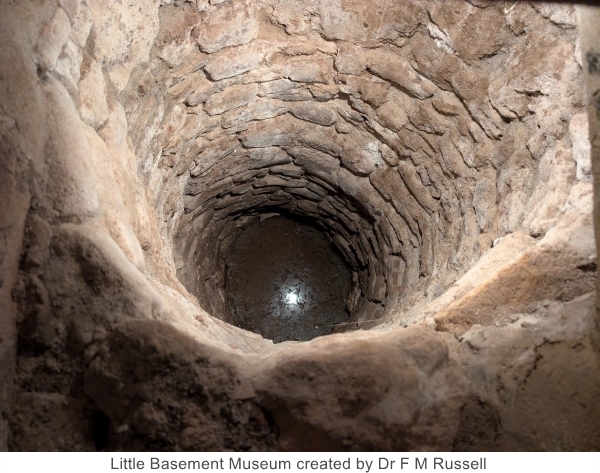
There’s also a well, which has water in it again after running dry during the summer, and an archaeological excavation pit that remains open for further investigation. Research displayed on the walls suggests that people have occupied this site for around 5,000 years. Some of the professions of more recent inhabitants are displayed, including a diorama of a worker with an early metal lathe.

It is interesting to think how many generations have lived and worked here, and the traces that have gradually disappeared under the ground.

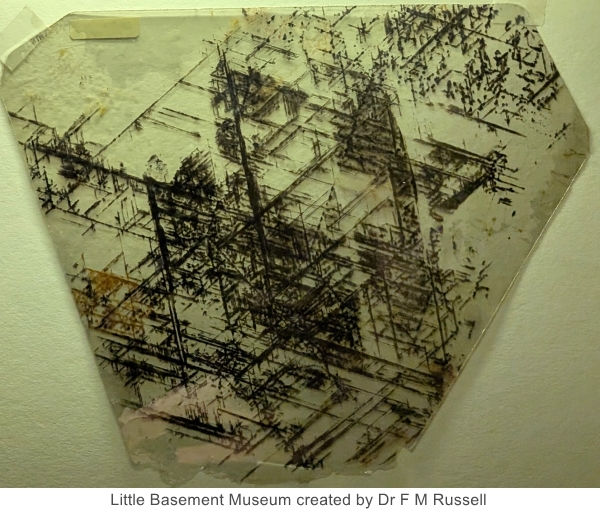
Dr Russell’s investigations have not been confined to what lies beneath the building. Upstairs, he has also pursued scientific discoveries. He investigated unexplained lines found in natural mica crystals. His experiments led to the discovery of a way of transporting electricity through solid materials without applying a voltage. The phenomenon has since attracted further research and may have potential medical applications.

This building is an archaeological time capsule underground with future looking Science discoveries above. As our guide said, “Dr Russell thinks outside the box.”

Final Days for the British Heart Foundation Shop


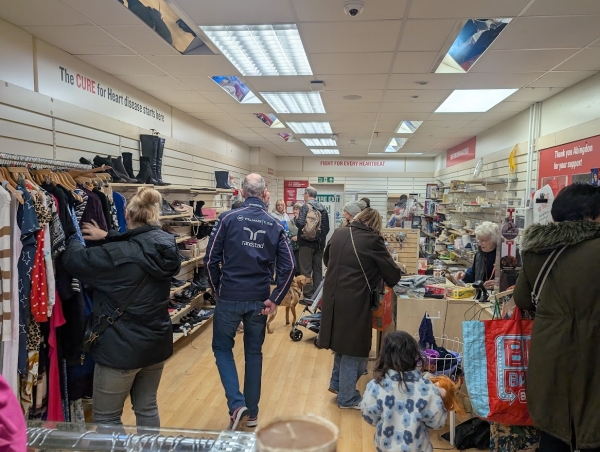
The British Heart Foundation shop closes on Saturday 21st November. It stopped accepting donations last week. The storeroom upstairs has been emptied, with everything brought downstairs to be sold. The shop itself is now beginning to look rather bare as customers take advantage of the closing-down offers. Many items are priced at just 50p. Bags of clothes are going for £5.

The shop has been running with a deputy manager, and a part time assistant, and a team of volunteers.

One volunteer, Dorothy (seen above on the till), has been there since it first opened over twenty years ago.