March 8th

Abingdon has decided at a meeting last week that the borough records shall contain a complete Roll of Honour for the town. The town has therefore been divided up for a Committee to procure the names and ranks of all Abingdon men who have served as sailors and soldiers during the war. Suggestions are being elicited for a public memorial.
The Abingdon Bowling Club held another pleasant whist drive in the Roysse Room, Abingdon, on Thursday evening, when there were nearly 150 present. Refreshments were served at the interval. Messrs C. Johnson and W. Flay ably took the duties of M.C.’s.
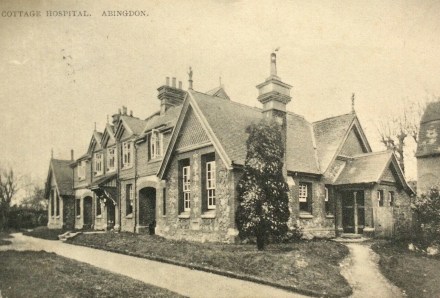
At the Abingdon Cottage Hospital annual meeting on Thursday, a satisfactory report and statement of accounts were passed, and the whole of the hon. officers were re-elected, with Mr H. Clarke as president.
A funeral pall has been presented by an anonymous donor to the parish of St. Helen’s. A short time ago a substantial wheeled-bier was presented.

The adjourned licensing meeting was held at the Borough Police Court on Tuesday, and sanction was given to Messrs Belcher and Habgood, brewers and wine and spirit merchants, of Abingdon, proprietors of the Queen’s Hotel, Market Place, to add to the hotel the adjoining premises formerly Hughes’s stationery and printing business, providing no intoxicants were sold on the new premises, and that the door leading into Queen Street be fastened up.
March 15th 1919
The Rev Charles H. Gill, pastor of the Congregational Church, Long Sutton, Lincolnshire, has been invited and has accepted the pastorate of the Abingdon Congregational Church, in the place of the Rev A. T. Rose, who has resigned.
A prize was recently offered by Mr Strauss, of Kingston House, to the owner of the heaviest pig at nine months at the time of slaughter, competitors to be residents in Abingdon. The prize has been awarded to Mr G. E. King, The Vineyard, Abingdon. Messrs A. Cornish and W. Cordell were the judges.
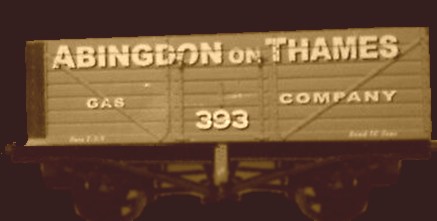
The annual meeting of the Abingdon Gas Company was held on Wednesday afternoon last week, Mr Pryce presiding. The accounts showed that £3231 was available for dividends, the allotting being 12/6 per share on Original and A shares, and 8/9 on the B shares. There had been an increase of consumption of gas attributable to the supply of gas to the Oxford and Wantage motor buses, the quantity consumed by private houses being considerably decreased. Messrs Couldrey and Stanisland were re-elected auditors.
A workman at the Sutton Courtenay Power Station on Thursday last found the body of elderly man floating in the stream close to the works, which, it appeared, had been in the water several days. It was subsequently found to be the body of William Roberts, aged 70 years, formerly of East Hendred. The body was dressed in workhouse clothes, but the hat and coat were missing. Mr Challenor, coroner, held inquest on Friday, and a verdict of ‘found drowned’ was returned.
Alfred Day and Edmund Koley, Oxford Road, Abingdon, were fined 10s each for delivering coal without weight tickets. Day did not appear, and Koley pleaded guilty.
March 22nd 1919
The Military Medal has been awarded to L.-Cpl. F. G Puffit. Royal Berks, Abingdon, for gallantry and devotion in the field last November.
The Abingdon Red Cross Hospital has now been closed, and the equipment lent being returned to the owners. The remainder is to be disposed of by sale.
The Abingdon Branch of the Berks Voluntary Organisation held its final meeting at the residence of the Mayor (Mr H. T. Clarke) on Wednesday evening. A statement was presented, which showed that the collections amounted to £428 5s 7d. At the close of the meeting Mrs H. Clarke was presented with an antique table with silver plate inscription ‘To Mrs H. T. Clarke, in recognition of her help in Abingdon for the Berkshire Voluntarv Organisation and Red Cross War Comforts Fund during the Great War, 1914-18. From her Red Cross Workers ‘
The National War Savings’ Cinematograph visited Abingdon Corn Exchange last week. Sir George Dashwood, Warren House, Abingdon, presided.
A sale of work in aid of the Blind and Hand Weaving Industry took place on Thursday afternoon at the residence of Lady Shirley, of Abingdon. The articles for sale consisted of baskets, mats, brushes, etc, made by the blind.
March 29th 1919
A meeting of an original character was held in Abingdon on Monday afternoon, when General J. T. Wigan, M.P.. conferred with a small committee of representative farmers in his constituency on the agricultural situation. General Wigan referred to the efforts made by the Agricultural Committee in the House to get the Government to announce a definite agricultural policy. Members of the committee pointed out that in the absence of such an announcement farmers had not sufficient confidence to invest in the land the capital that was required to clean the land of the foul state into which it had fallen during the war, and to bring it back to the condition of cultivation that existed in pre-war days. Certain facts were brought to the notice of General Wigan for him to deal with in Westminster.
Thanks to extracts from the Faringdon Advertiser and Vale of the White Horse Gazette – All Rights Reserved. britishnewspaperarchive.co.uk. Also a 1916 Postcard of Cottage Hospital – Country Series 1489. The 1924 Guide of Abingdon for the Queens Hotel advert. The Abingdon Gas Company carriage is a modern model railway carriage.


