Category Archives: heritage

Heritage Open Days – Saturday


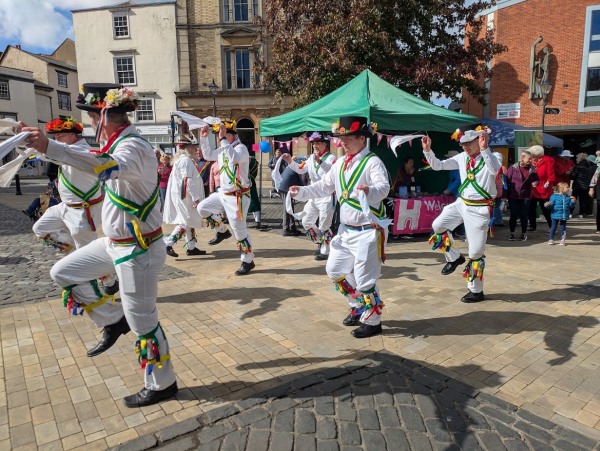
Heritage Open Days returned to Abingdon this weekend, with Saturday as the main day of events. This year’s national theme was architecture, and many local organisations opened their doors to show off Abingdon’s historic buildings. In the Market Place there was a Heritage Open Day stall providing maps and guidebooks for visitors, along with entertainment from The Abingdon Traditional Morris Dancers.
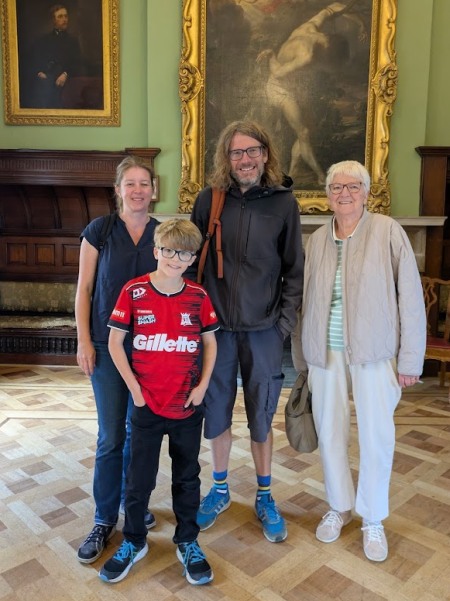
The event attracted people from far beyond Oxfordshire – even from as far away as New Zealand. These visitors were photographed in the Guildhall.
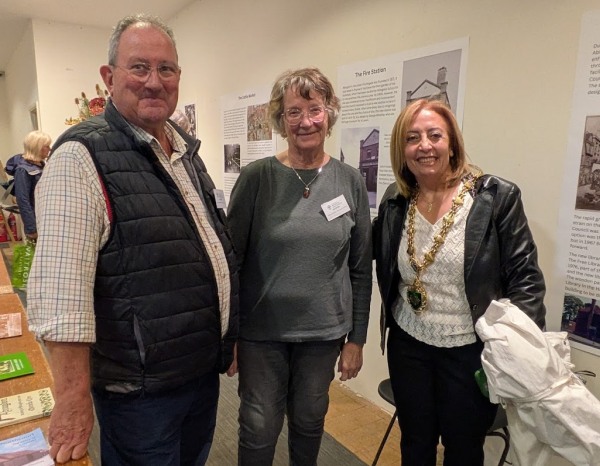
The Mayor of Abingdon, Cllr Rawda Jehanli, toured the exhibitions, pictured here with two of the event organisers who were showing her round.
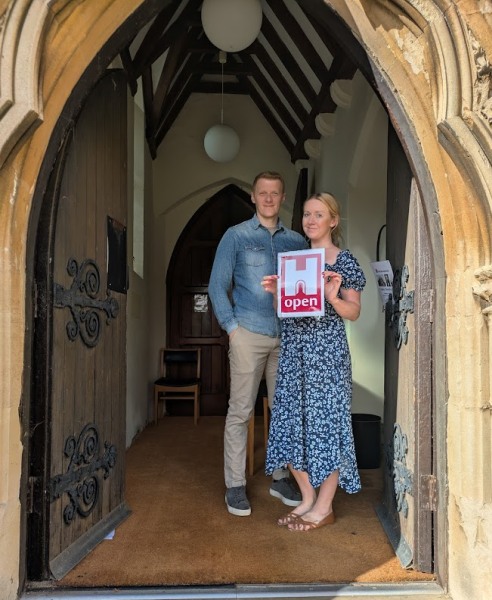
At Trinity Church, welcomers greeted people and answered questions.
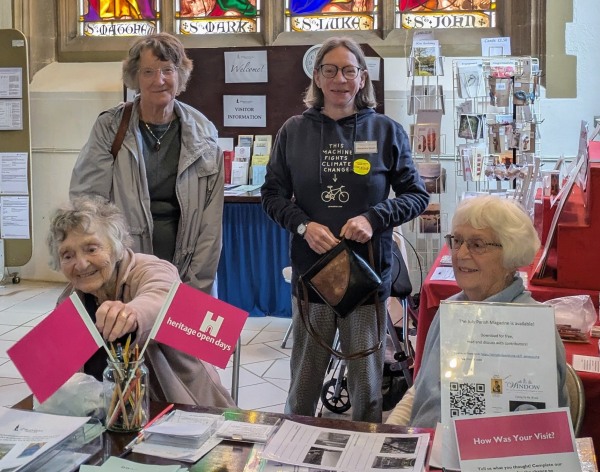
There was also a friendly welcome at St Helen’s Church, where among other things was an old parchment tithe map from 1842.
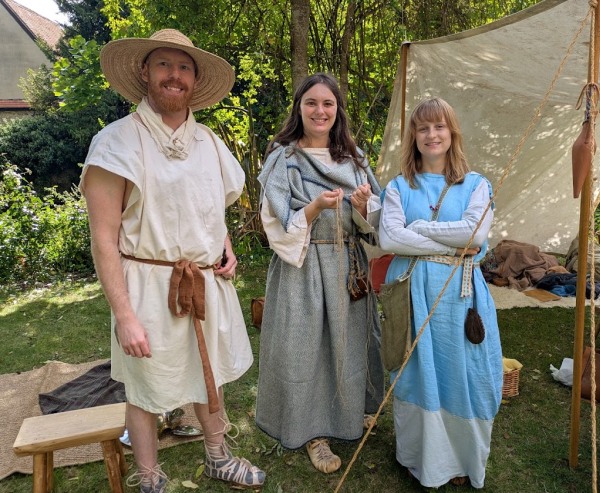
The Abbey Buildings go even further back and hosted re-enactors dressed as Roman citizens, bringing the era to life.
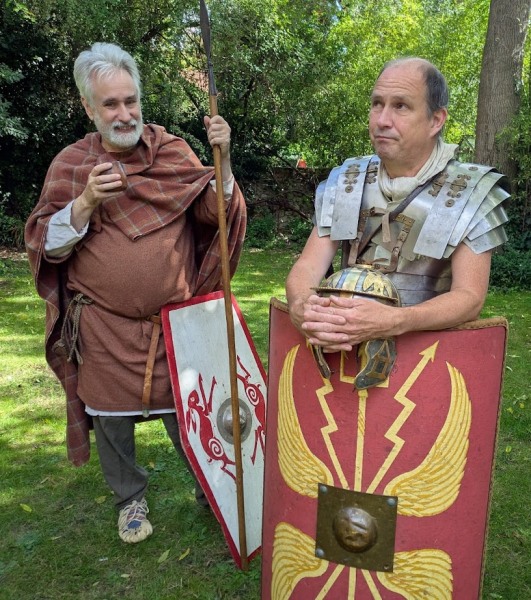
A couple of soldiers were recovering after a re-enactment battle. They had one at 11 am and one at 2 pm.
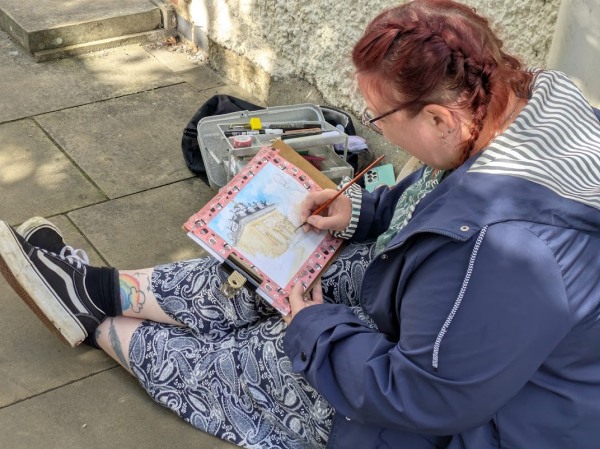
As part of Heritage Open Days, the Abingdon Artists ran their Landscape in a Day event, with artists painting views of the town’s buildings and streets.

Some venues were especially popular. The tours of the Sophos building were fully booked when I applied.
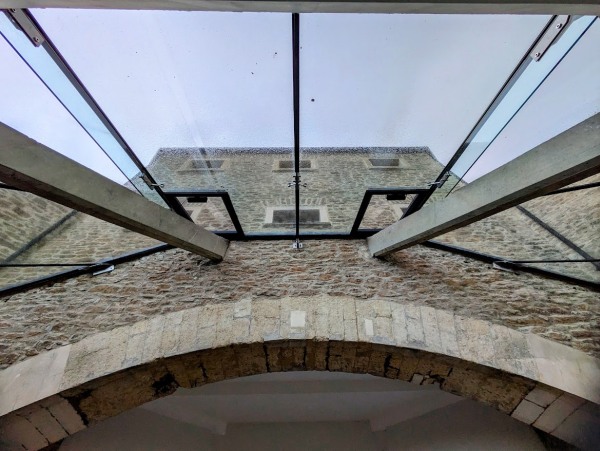
I was, however, able to visit the Old Gaol Atrium, a space that combines the historical with modern glass and concrete.
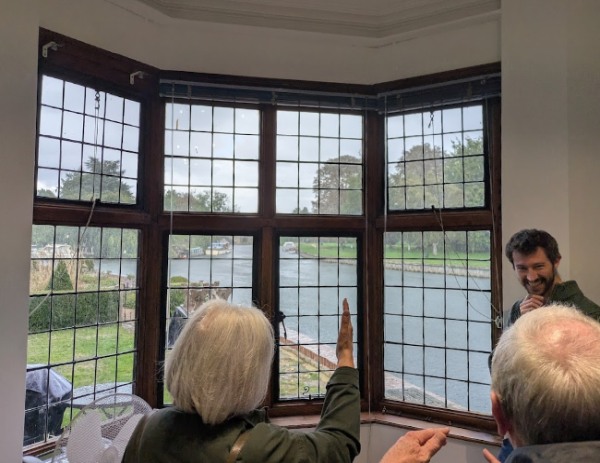
I also explored the offices of West Waddy, the local architecture firm based in a spectacular old building with views of the River Thames. The day was mostly sunny but there were some cracks of thunder and occasional showers.

Heritage Open Days carry on tomorrow, Sunday, with more walks, exhibitions, and hidden corners of Abingdon to explore.
Heritage Open Days – Friday


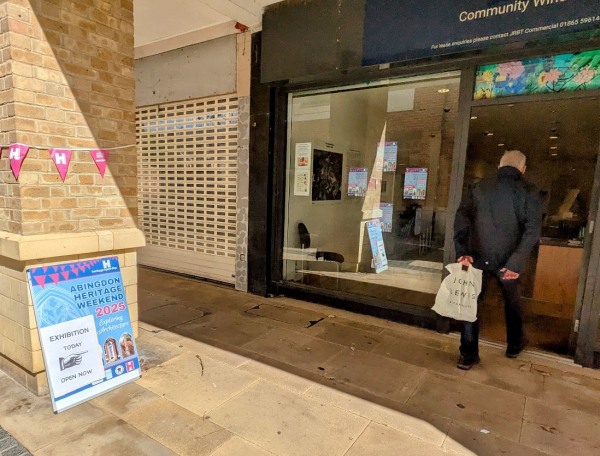
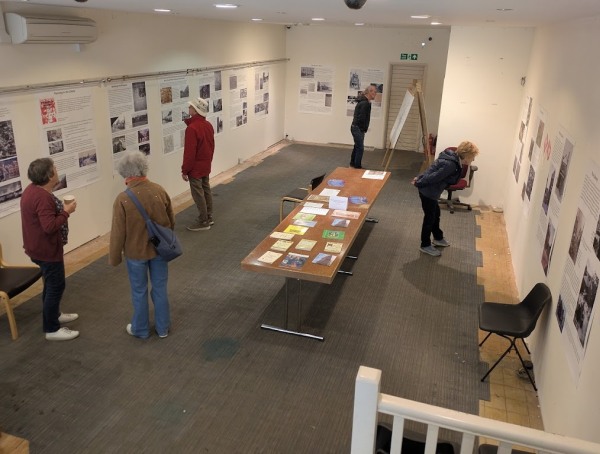
Unit 25 in Bury Street has launched the first exhibition of this year’s Heritage Open Days – opening a day ahead of the wider programme.

The ground floor exhibition shows the changing face of central Abingdon in the 60s and 70s. Displays trace the development of Bury Street precinct, the Charter area and Stratton Way, with detailed accounts of the buildings that were lost. One panel explains how the Victorians replaced earlier Georgian structures – and other panels show how, when their own landmarks such as the Queen’s Hotel and the Corn Exchange fell out of favour in the 1960s, they too were swept away for modernist redevelopment. In 2012 the flat roofs and covered walkways were in turn replaced with pitched roofs and wider streets.

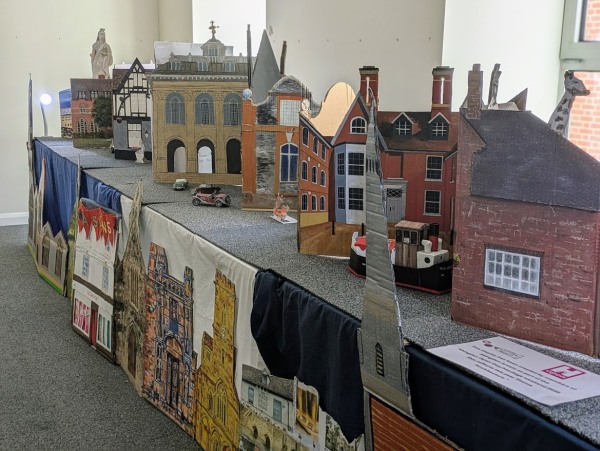
Upstairs the focus is on local creativity. Abingdon artists are showing paintings of historic buildings to be in an upcoming book. Last year’s cardboard models of local landmarks also return, alongside a display on the Culham fusion research project.

There’s more to come when the main Heritage Open Days programme begins on Saturday.

Abingdon 100 Years Ago – August 1925


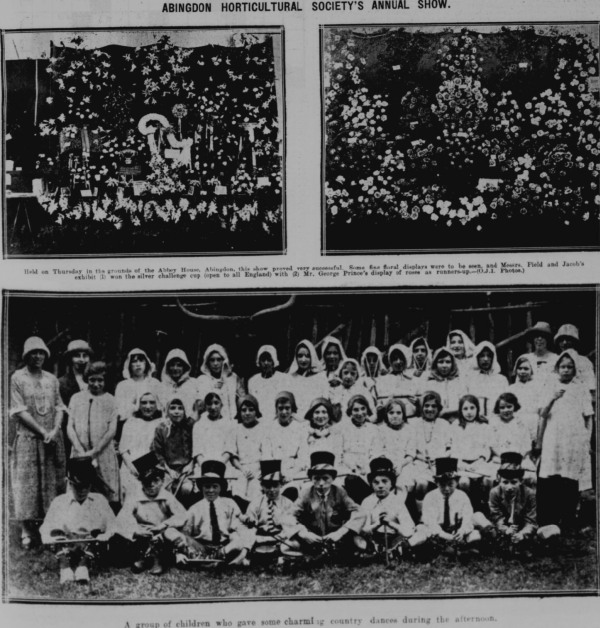
ABINGDON HORTICULTURAL SHOW — The Abingdon Horticultural Society’s annual show on Thursday 14th August 1925 was a great success, with a high number of entries and strong quality throughout. The handsome challenge cup, presented by the tradespeople of the town for the best exhibit of cut flowers (open to all England), attracted only three entries, but the winning display by an Oxford firm was outstanding and became the chief attraction in the exhibition tents.

The recently added rabbit and pigeon sections showed increased support, and the judges praised the standard of entries.

Among other entertainments, a display of Morris dancing by children in costume proved especially popular. Their performance was carried out with precision, and their behaviour reflected credit on their trainers. The Ock-street Horns used in some dances were kindly lent by Alderman A.W. Morland.

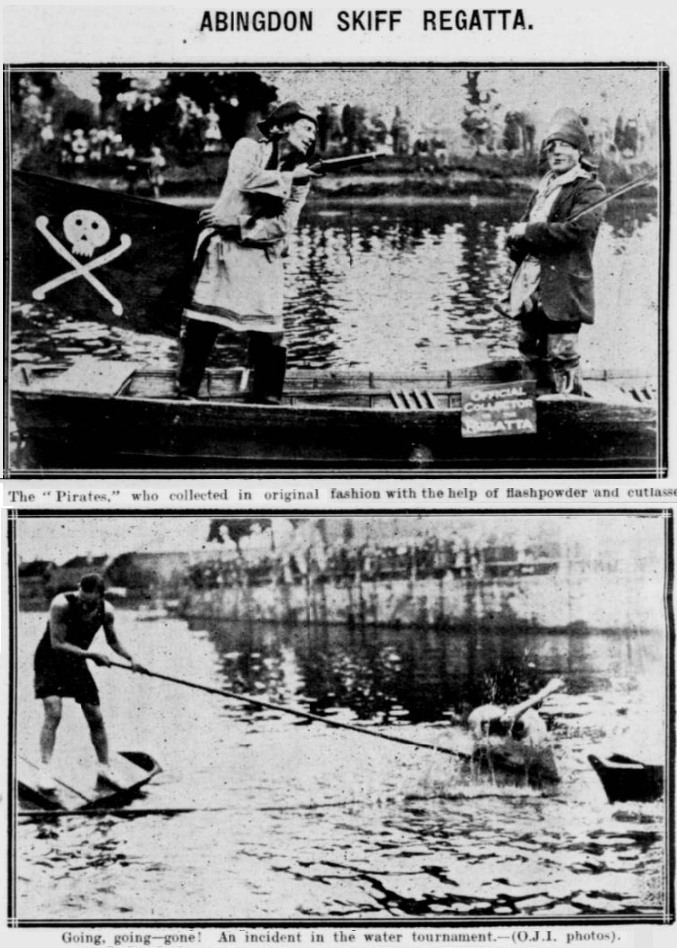
ABINGDON SKIFF REGATTA — The Abingdon Skiff Regatta was held on Saturday 22nd August 1925 in the Wilsham Reach. Some very good racing was witnessed, with 57 events in the programme. During the afternoon and evening music was performed by the Abingdon Town Band. At the conclusion of the races the prizes were presented by the Mayoress, followed by dancing on the Nag’s Head Hotel tennis lawns.

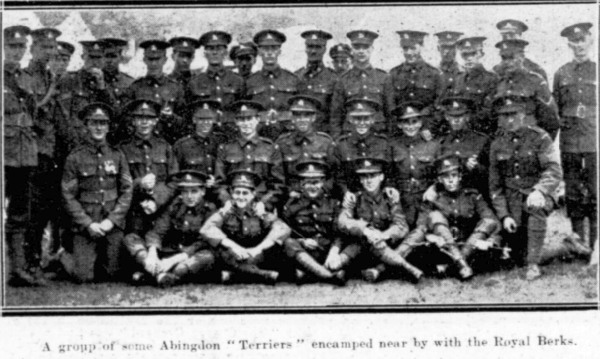
ABINGDON LOCAL TERRITORIALS — The Abingdon Platoon of the 4th Battalion, Royal Berkshire Regiment – The Abingdon ‘Terriers’ – returned from Weymouth, where they had been in camp for a fortnight.

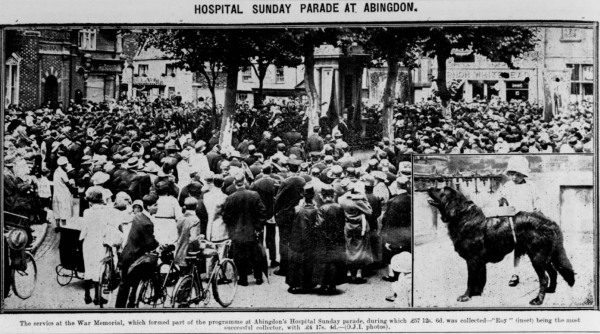
HOSPITAL SUNDAY — Abingdon Hospital Day was held on Sunday 23rd August 1925. There was a Church parade of friendly societies and other organisations in the afternoon, headed by the Abingdon and Didcot Bands, and the Salvation Army and Steventon Bands. In High Street the procession met the Mayor and Corporation, and then proceeded to St. Helen’s Church, where a service was conducted by the Vicar (Rev. C. S. Fleet). Afterwards the parade again formed up and marched to the cenotaph, where a minute’s silence was observed, and two verses of the hymn O God, Our Help in Ages Past were sung. In the evening a concert was given by the massed bands in the Abbey House grounds. (‘Roy’, the dog inset in the picture, was the most successful collector with £4 17s 4d. In total £57 12s 6d was collected for local hospitals.)

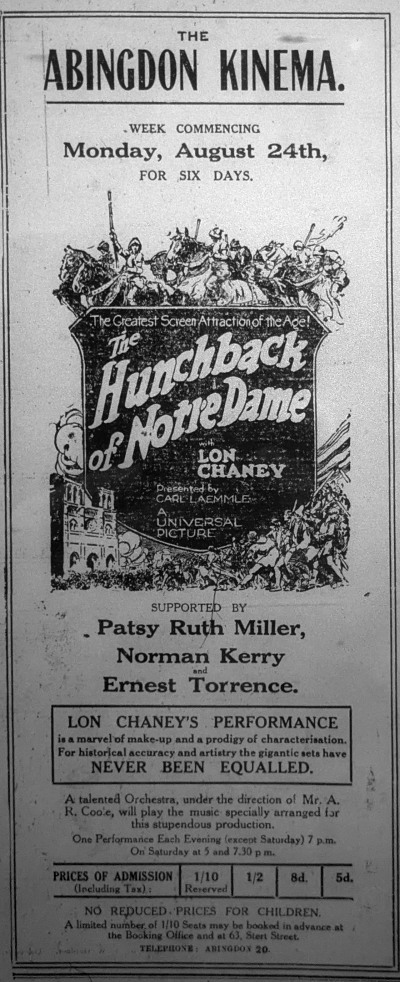
KINEMA.— The Hunchback of Notre Dame, the film production of Victor Hugo’s famous novel, was presented for six days commencing Monday, August 24th, 1925.

Probably never before has there been a picture of such magnificence – costing £300,000, exact in its detail, artistic in conception, and wonderful in the acting of the principals and in the handling of the vast mob scenes, in which more than 3,000 persons took part.

Lon Chaney, one of the finest interpreters of unusual character roles, gave a remarkable performance as Quasimodo, the hunchback bellringer of Notre Dame, with Ernest Torrence as Clopin, the underworld king, and Patsy Ruth Miller as Esmeralda.

The film played to full houses throughout the six days. A talented orchestra, conducted by Mr R A Coole, played music specially arranged for this production.

Thanks to the Oxford Journal for the photographs of Abingdon events from the British Newspaper Archive. Also thanks to the Faringdon Advertiser and Vale of the White Horse Gazette from the British Newspaper Archive for story details and the North Berks Herald microfilm in the library  for story details and the Kinema advert.

Boundary Stone Puzzles

Paul has sent me pictures of two boundary stones recently. Here’s what we know. It’s a puzzle.

The first stone is on the Drayton Road, wedged between a wall and a bush, almost hidden behind a streetlight. The inscription faces a brick wall just a few inches away, and many of the letters have worn away with time.
The text appears to read something like:

?0 YARDS FROM
THE BRIDGE
?LONG THE???
HENCE IN ?
??RAIGHT ???
?? JUNCTION OF
?HE OCK RIVER
WITH THE LARK
??LL STREAM

With a bit of guesswork, it may originally have read:

“?0 YARDS FROM
THE BRIDGE
ALONG THE [PATH?]
HENCE IN A
STRAIGHT LINE
TO THE JUNCTION OF
THE OCK RIVER
WITH THE LARK
HILL STREAM”

This suggests a boundary line to the bridge on Drayton Road and then to a place where the River Ock meets the Lark Mill Stream. 
The second stone is on the Faringdon Road, directly opposite the entrance to Larkmead School. Paul cleared back some of the vegetation to reveal it properly. This one appears to have a carved cross at the top — likely the Abingdon Borough cross — and below that, some worn letters. One line may read MEN, possibly part of the word PARLIAMENTARY, and beneath that UNDA, which might be part of the word BOUNDARY.

Both stones appear to mark out old administrative or land boundaries.