Category Archives: heritage

What’s left of Fitzharris Manor House and why it’s sometimes Fitzharrys


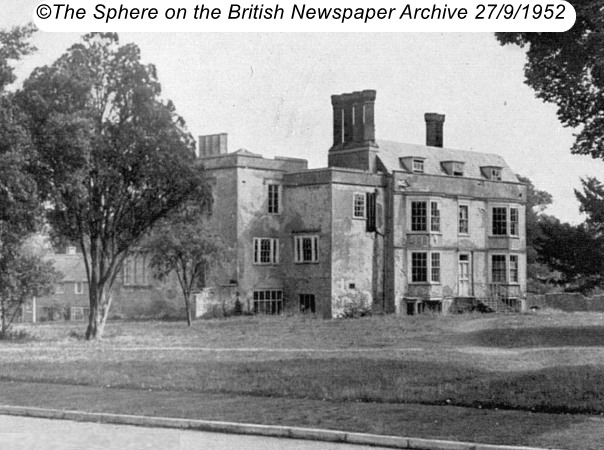
This photo is from 1952. The houses in Kingston Close, behind Fitzharris Manor House, were built between 1946 and 1948 for workers at Harwell’s Atomic Energy Research Establishment, established in 1946.

The manor house and grounds had been requisitioned by The Ministry of Supply. While building the new housing estate, the Ministry also proposed demolishing the house. The Friends of Abingdon and the Council for the Preservation of Rural England had both voiced strong opposition to the demolition arguing that the Elizabethan and eighteenth-century architecture had been allowed to fall into disrepair due to years of neglect by the Ministry. Abingdon Borough Council expressed doubts about its ability to afford the repairs of £20,000 even if the property were gifted to the town. The Ministry then went ahead and demolished the manor house early in 1953.
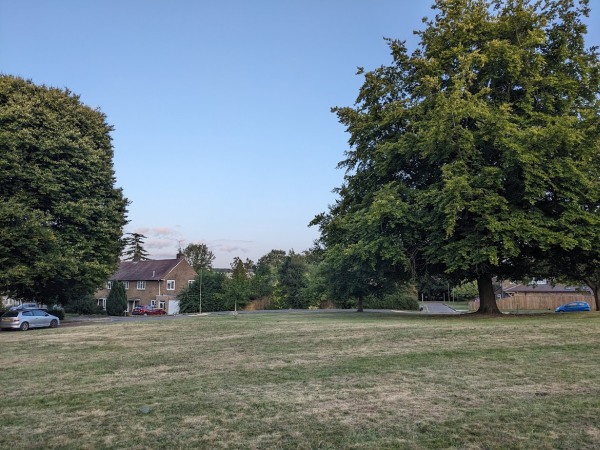
Nothing was ever built on the site where the manor house stood. Today, it’s a green space with trees, a plaque commemorating the house, and its foundations buried underground. This picture offers a similar view from the green towards Kingston Close.
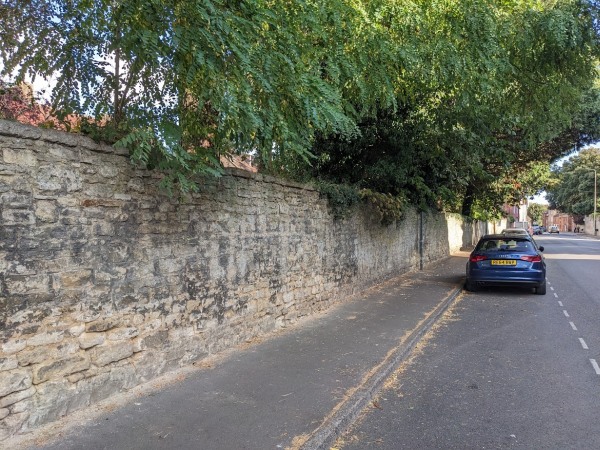
There are some surviving features from the original estate. Stone walls and trees surround parts of the property, including the wall along Bath Street and that running between the estate and Withington Court, and along Fitzharrys Road.
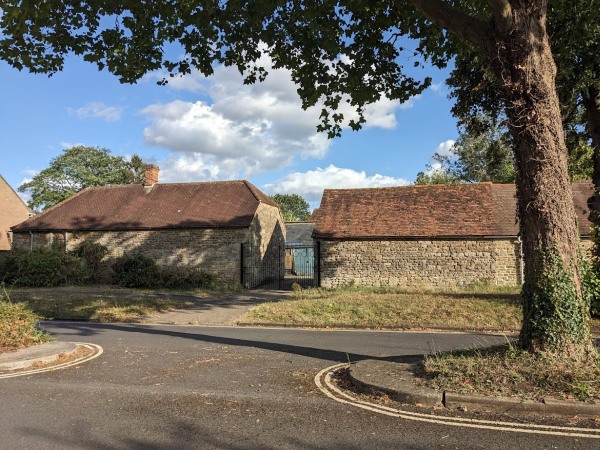
There is also a stable yard that is used for garages and what looks like an electricity substation.
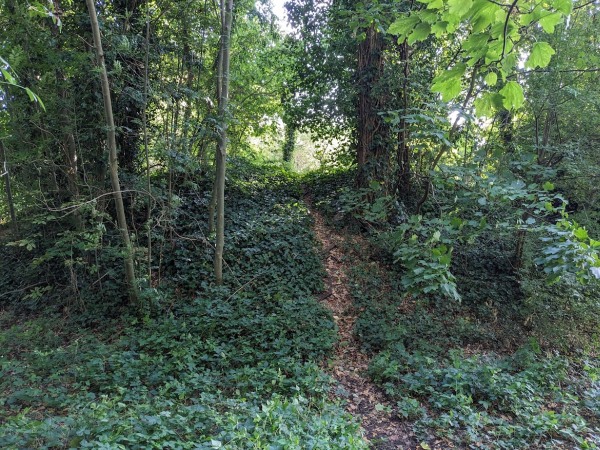
The most significant survivor, however, is the motte and bailey mound, a pre-existing Norman fortification that predates and has outlasted the house.

There is more about the Fitzharris Estate at https://www.abingdon.gov.uk/abingdon_streets/fitzharris-estate .

What confuses me are the variations in spelling with the old estate called Fitzharris and there is a Fitzharris Industrial Estate, but there are Fitzharrys Road and Fitzharrys School.

Thanks to The Sphere on the British Newspaper Archive 27 September 1952 for information about the protests and the first photo. To Dick Barnes article ‘Fitzharris Manor, Abingdon: from Gentleman’s residence To Demolition’ for ideas about what remains. To Abingdon Past and Present by E Drury and J Thomas for pointing out the houses behind the manor house are Kingston Close. To Alwyn for telling me about the estate today and showing me the estate wall in his back garden. He also said the houses had garages as some American scientists at the time, who AERE wanted to keep after the war, expected garages.

Abingdon Vehicles Meet Mini-Me Buildings


Unit 24 – The Community Space (Bury Street) is now showing vehicles made and painted by Abingdon Artists  placed in front of the Abingdon buildings they made last year for Heritage Open Days. This year’s heritage theme, Routes – Networks – Connections, has inspired the new creations.

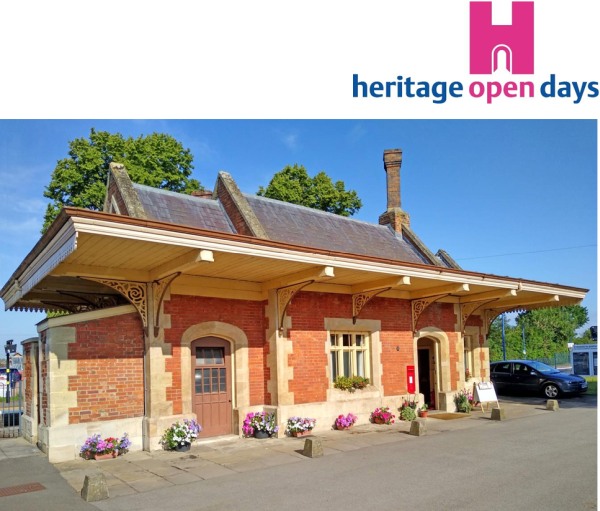
To mark its 180th anniversary the Old Ticket Office at Culham will be opening to the public over Heritage Weekend (Saturday 14 September and Sunday 15 September) between 09:00 and 17:00. This will provide an opportunity to see inside an original Brunel designed station building.

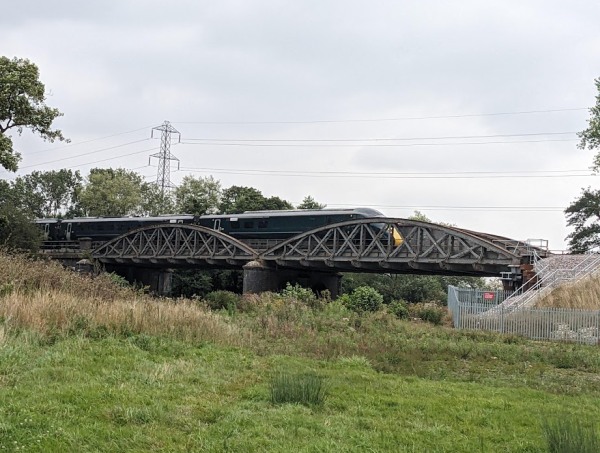
The railway line to Culham passes relatively close to Abingdon. Trains pass over the River Thames near the Thames Path and beside the footpath leading via Swift Ditch to Clifton Hampden. Network Rail completed repairs to the Nuneham Viaduct around a year ago after it was closed in April 2023 due to structural issues. You can see the repaired south bank in this picture.

Abingdon 100 Years Ago – July 1924


Foot and Mouth Disease Spreads

Further outbreaks of Foot and Mouth disease have occurred at Sunningwell and Dunmore, Wootton. Twelve cattle were destroyed at Mr. Greening’s farm in Sunningwell, and eight at Mr. John Benson’s farm in Dunmore last Monday.

Hospital Board Approves Increased Charges for Isolation Hospital

At a meeting of the Abingdon Joint Hospital Board last Thursday, a new scale of charges was approved. The new charges are: £3 per week per patient for up to three patients, £2 15s per week for six patients, and £2 10s per week for over six patients. Ambulance use will be an additional charge.

Abingdon Groups Enjoy Day Out at Wembley

A group of about 300 people from Abingdon, including members of the Abingdon Constitution Association, the Junior Imperial League, the Abingdon Glove Factory, and Messrs. Coxeters, visited the British Empire Exhibition at Wembley on Saturday. They departed from Abingdon Station at 8:30 AM and returned around midnight. Major Glyn accompanied the Junior Imperial League for part of the day.

Firefighters Prevent Major Damage at Culham Farm

Abingdon Fire Brigade was called to a fire involving two ricks of straw at Mr. P. E. Saunders’ farm in Culham on Saturday. A plentiful supply of water from the river prevented the complete destruction of the ricks.

North Oxford Croquet Club Defeats Abingdon

The North Oxford Croquet Club defeated the Abingdon team by 64 to 58 in a match with a 2.5 hour time limit on Thursday afternoon.

Boy Sent to Reformatory for Arson

A 14-year-old boy from Radley was sentenced to three years in a reformatory on Monday for setting fire to two cottages. He was detained at the Union Workhouse until a place was found and then sent to the Northampton Training School near Towcester.

Grammar School Celebrates Founder’s Day

The Grammar School (Roysse’s) held its Founder’s Day on Friday. The day included a church service, prize-giving, an “At Home” with the HeadMaster and Mrs. Grundy and the traditional Old Boys’ cricket match, which the school won. The school regatta took place on Thursday.


Bible Students Predict End Times

The International Bible Students Association announced a free lecture on “All Nations Marching to Armageddon” in the Roysse room. “But millions are now living will never die.” This meeting is one of an extensive campaign throughout the locality. The Bible students, hold and maintain that great and wonderful changes are taking place in the Earth and that the Kingdom of Christ is at hand. It will be introduced and established on the ruins of the present order.

General Fined for Car Without Lights

General Sir Percy Radcliffe was fined 10 shillings for leaving his car without lights in Bath Street on July 1st.

Maintenance Case Dismissed Due to Wife’s Conduct

A case against Henry Charles Paish for failing to maintain his wife at the Abingdon Union Workhouse was dismissed after the court heard allegations of her immoral conduct. She had been admitted into the Union for confinement. Defendant stated that he lived with his wife for about three weeks after their marriage while on leave after which his wife went back to domestic service, and he went to India with the forces. They had not lived together since that time. The magistrates Clerk submitted that in accordance with a case cited in the law books the Guardians were not entitled to an order in such a case. The summons was dismissed.

Abbey Grounds Open to Public

The Abbey grounds, formerly the residence of the Bishop of Reading, were opened to the public for the first time on Monday and Thursday afternoons and evenings. Admission is free.


Abingdon Skiff Regatta

The annual Abingdon Skiff Regatta was a success on Saturday. The event included races, dancing, and a procession of illuminated boats.

Sources were the Oxford Chronicle and Reading Gazette on the British Newspaper Archive, The North Berks Herald from the Abingdon Library microfilm. Thanks to Wikipedia for the poster for the British Empire Exhibition and the advert for a lecture about the world ending in 1925.

Spring Road Cemetery: An A-Z of Abingdon Citizens


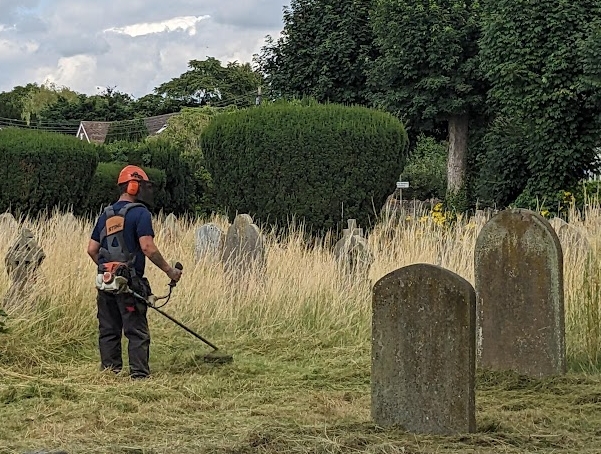
As the school summer holidays commence, the town of Abingdon undergoes a change. The Spring Road Cemetery also underwent a seasonal change with the long grass being cut.

It had become a wildflower meadow with butterflies and bees.

The cemetery has two Gothic-style chapels, built in 1860. One chapel is available for funeral services (of up to 30 people). The other serves as a chapel of rest for Edward Carter Funeral Directors.

Spring Road Cemetery stands as an A-Z of some of Abingdon’s past residents, ranging from everyday citizens to prominent figures.

Among the legible graves is that of Vera Olive Alder, who passed away at the age of 23. She lies with her parents, Alice and George Alder, formerly of Ock Street, Abingdon. The 1911 census records George as an auctioneer’s porter, while Alice managed the household. Vera was two years old at the time of that census.

Another figure is William Bowler, who died in 1870 at the age of 50. He was known for running a building business in the town employing 6 men and 2 boys in the 1861 census.

One particularly impressive monument is dedicated to John Creemer Clarke (1821 –1895), a former local MP, town benefactor, and owner of a clothing factory that provided employment for many Abingdon residents.

P.S. The first grave has a cross representing Jesus. The letters IHC or IHS on the last two graves are both an abbreviation of Jesus’ name in Greek.